
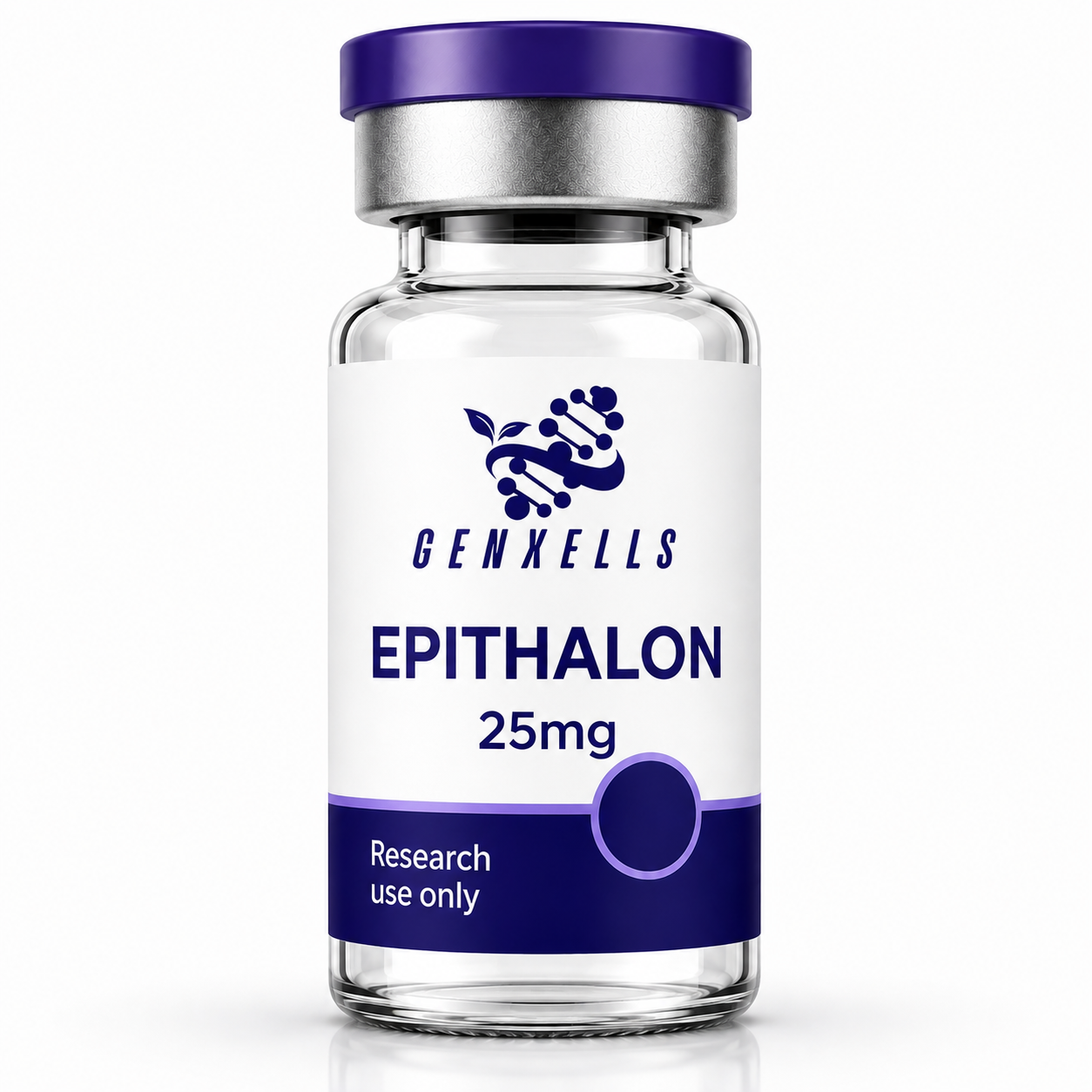
Buy Epithalon 25mg Online
Buy Epithalon 25mg Online, also known as Epitalon, is a synthetic tetrapeptide composed of four amino acids: alanine, glutamic acid, aspartic acid, and glycine (AEDG). It was originally developed by researchers at the St. Petersburg Institute of Bioregulation and Gerontology as a synthetic analogue of epithalamin, a peptide complex isolated from the pineal gland.
Over the past several decades, Epithalon has attracted scientific attention because of research investigating its potential effects on telomerase activity, cellular aging, circadian rhythm regulation, and melatonin production. Although laboratory studies and a limited number of early human investigations have generated interest, Epithalon has not been approved by the U.S. Food and Drug Administration (FDA), the European Medicines Agency (EMA), or other major regulatory authorities for therapeutic use. Most evidence remains preliminary and requires confirmation through larger, well-designed clinical trials.
For educational information about peptide science and biomedical research:
Website: https://genxells.com/
Email: info@genxells.com
What Is Epithalon?
Epithalon is a synthetic peptide designed to mimic certain biological properties of epithalamin, a naturally occurring extract associated with the pineal gland.
Researchers have investigated Epithalon primarily because of its possible influence on:
- Cellular aging
- Telomerase activity
- Circadian rhythm regulation
- Pineal gland biology
- Oxidative stress
- Cellular repair mechanisms
It is important to note that these areas remain subjects of scientific investigation and do not establish proven medical benefits in humans.
How Does Epithalon Work?
Current laboratory research suggests that Epithalon may influence several biological pathways.
Scientists have investigated whether it may:
- Affect telomerase enzyme activity
- Influence telomere maintenance
- Support pineal gland function
- Modulate melatonin-related pathways
- Influence cellular stress responses
- Affect gene expression involved in aging research
Much of this work has been conducted in laboratory models or small studies, and the exact mechanisms in humans remain uncertain.
Areas of Scientific Research
Aging Biology
The largest body of research involving Epithalon focuses on the biology of aging.
Scientists continue studying:
- Cellular senescence
- Healthy aging
- DNA stability
- Cellular repair
- Oxidative stress
- Age-related biological changes
These investigations help researchers better understand the aging process rather than establish clinical treatments.
Telomere Research
One of the most discussed areas of Epithalon research involves telomeres, the protective structures located at the ends of chromosomes.
Laboratory studies have explored whether Epithalon may influence telomerase, an enzyme involved in maintaining telomere length. However, findings from cell cultures and animal studies should not be interpreted as evidence that Epithalon slows aging or extends lifespan in humans. Human evidence remains limited.
Circadian Rhythm Research
Because Epithalon originated from pineal gland research, scientists have also explored its relationship with:
- Circadian rhythm regulation
- Sleep physiology
- Melatonin biology
- Neuroendocrine signaling
Further clinical investigation is required before any therapeutic conclusions can be drawn.
Cellular Biology
Researchers continue investigating Epithalon’s potential influence on:
- Cellular communication
- Gene regulation
- Protein synthesis
- Oxidative stress responses
- Tissue biology
Most evidence comes from laboratory research.
Current Scientific Evidence
Published research includes:
- Cell culture studies
- Animal experiments
- Small clinical investigations
- Aging biology research
- Molecular biology studies
Despite decades of research, there are no large, internationally replicated clinical trials demonstrating that Epithalon safely or effectively prevents aging or treats disease in humans. Much of the published work originates from a limited number of research groups, highlighting the need for broader independent validation.
Regulatory Status
Current regulatory information includes:
- No FDA-approved Epithalon medication exists.
- No EMA-approved therapeutic product is currently available.
- Epithalon is classified as an investigational research peptide.
- It has no approved medical indication in most countries.
Products marketed as research chemicals should not be considered equivalent to approved pharmaceutical medicines.
Safety Considerations
Because Epithalon has not completed the full regulatory approval process, comprehensive long-term safety information is limited.
Important considerations include:
- Limited human clinical data
- Unknown long-term safety profile
- No standardized therapeutic dosing
- Potential variability in product quality outside regulated pharmaceutical manufacturing
- Uncertain long-term biological effects
Individuals should not rely on investigational peptides in place of evidence-based medical care.
Importance of Professional Medical Care
People concerned about healthy aging, sleep disorders, endocrine health, or chronic medical conditions should consult qualified healthcare professionals.
Evidence-based care may include:
- Preventive healthcare
- Healthy nutrition
- Regular physical activity
- Adequate sleep
- Chronic disease management
- Approved medications when appropriate
- Routine medical monitoring
These strategies are supported by substantially stronger clinical evidence than investigational peptides.
Future Research
Scientists continue studying Epithalon because it may improve understanding of:
- Cellular aging
- Telomere biology
- Pineal gland physiology
- Circadian rhythms
- Molecular gerontology
- Peptide pharmacology
Future high-quality clinical trials will be necessary to determine whether any laboratory observations translate into safe and effective medical applications.
Frequently Asked Questions
What is Epithalon?
Epithalon is a synthetic tetrapeptide develope for research into aging biology, telomerase activity, and pineal gland function.
Is Epithalon FDA approve?
No. Epithalon has not been approve by the FDA or other major regulatory authorities for therapeutic use.
What has Epithalon been researched for?
Researchers have investigated cellular aging, telomerase activity, circadian rhythm biology, melatonin regulation, and molecular gerontology.
Does research prove anti-aging effects in humans?
No. While laboratory and early studies have generated interest, current evidence is insufficient to conclude that Epithalon safely or effectively slows aging or extends lifespan in humans. Larger clinical trials are needed.
Learn More
For educational information about peptide science, biomedical research, and health topics:
Website: https://genxells.com/
Email: info@genxells.com
Final Thoughts
Epithalon remains an important subject in peptide and aging research because of its potential relationship with telomere biology, circadian regulation, and cellular aging mechanisms. Although decades of laboratory investigations have expanded scientific understanding of these processes, Epithalon remains an investigational peptide without regulatory approval for therapeutic use. Individuals interested in healthy aging should rely on evidence-based lifestyle measures and consult qualified healthcare professionals for personalized medical advice. Continued scientific research may further clarify the biological role of Epithalon while ensuring that any future therapies meet rigorous standards of safety and effectiveness.
1 review for Buy Epithalon 25mg Online
Add a review
Related products
Peptide
Peptide
Peptide
Peptide
Peptide
Peptide
Peptide
Kecefam –
Excellent customer service and clear communication. Everything arrived exactly as described, and I’m very satisfied with the overall experience.