
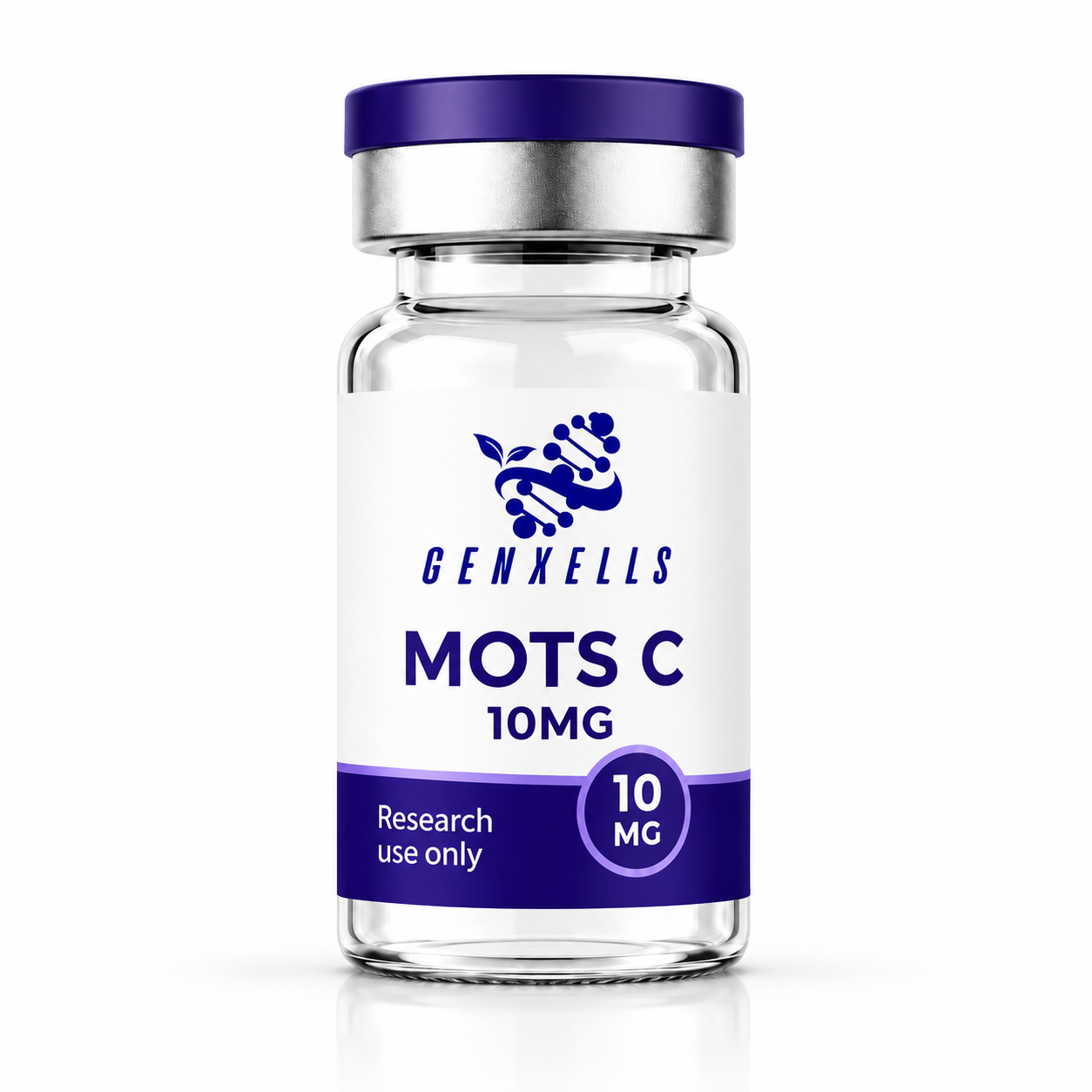


Buy Mots C 10mg Online
Buy Mots C 10mg Online (Mitochondrial Open Reading Frame of the 12S rRNA Type-c) is a naturally occurring mitochondrial-derived peptide (MDP) discovered in 2015. Unlike most proteins encoded by nuclear DNA, MOTS-c is encoded by mitochondrial DNA, making it an important focus of research into cellular energy production, metabolism, and healthy ageing.
Scientists have become increasingly interested in MOTS-c because laboratory studies suggest it may influence energy metabolism, insulin sensitivity, exercise adaptation, and cellular stress responses. These findings have generated considerable attention in metabolic and ageing research. However, MOTS-c remains an investigational peptide and has not been approved by the U.S. Food and Drug Administration (FDA), the European Medicines Agency (EMA), or other major regulatory authorities for therapeutic use. Most available evidence comes from laboratory and animal studies, and additional human clinical research is needed.
For educational information about peptide science and biomedical research:
Website: https://genxells.com/
Email: info@genxells.com
What Is MOTS-c?
MOTS-c is a 16-amino-acid peptide naturally produced inside mitochondria, the structures often referred to as the energy-producing components of cells.
Researchers believe MOTS-c participates in communication between mitochondria and the cell nucleus, helping regulate how cells respond to metabolic stress. Because mitochondria play a central role in energy production, scientists continue investigating whether mitochondria-derived peptides contribute to overall metabolic health.
How Does MOTS-c Work?
Experimental studies suggest that MOTS-c may activate important cellular pathways involved in energy balance.
Researchers have investigated its potential effects on:
- AMP-activated protein kinase (AMPK)
- Glucose metabolism
- Cellular energy regulation
- Mitochondrial function
- Oxidative stress responses
- Metabolic adaptation during exercise
Most of these observations come from laboratory experiments and animal models. Their relevance to routine clinical care remains uncertain pending further research.
Areas of Scientific Research
Metabolic Health Research
The largest body of research involving MOTS-c focuses on metabolism.
Scientists are studying how mitochondrial signaling influences:
- Glucose regulation
- Energy production
- Cellular metabolism
- Skeletal muscle function
- Healthy aging
These investigations help improve understanding of normal physiology but do not establish approved therapeutic uses.
Exercise Physiology
Laboratory studies have explored whether MOTS-c participates in the body’s natural response to physical activity.
Researchers continue examining:
- Exercise adaptation
- Endurance physiology
- Skeletal muscle metabolism
- Cellular stress responses
Some animal studies have reported improvements in exercise performance, but these findings cannot be directly applied to humans without additional clinical evidence.
Aging Research
Scientists are also investigating MOTS-c because mitochondrial function changes with age.
Research areas include:
- Healthy aging
- Cellular resilience
- Mitochondrial biology
- Oxidative stress
- Age-related metabolic changes
Current evidence remains preliminary and does not demonstrate that MOTS-c prevents or reverses aging in humans.
Mitochondrial Biology
MOTS-c has become an important research tool for understanding:
- Mitochondrial communication
- Cellular adaptation
- Gene regulation
- Energy homeostasis
- Stress-response signaling
These studies contribute to broader knowledge of human cell biology.
Current Scientific Evidence
Published research includes:
- Cell culture experiments
- Animal studies
- Molecular biology investigations
- Early-stage clinical research
- Metabolic physiology studies
Although findings are scientifically promising, there are no completed large-scale clinical trials demonstrating that native MOTS-c is safe or effective for treating disease in humans. Expertemphasiseze that additional randomised clinical studies are required before therapeutic conclusions can be drawn.
Regulatory Status
Current regulatory information includes:
- No FDA-approved MOTS-c medicine exists.
- No EMA-approved therapeutic product is available.
- MOTS-c remains an investigational research peptide.
- It has no approved medical indication in major jurisdictions.
- The peptide is also prohibited in competitive sport under anti-doping rules because it is considered an experimental performance-modifying substance.
Availability from research suppliers does not indicate regulatory approval or established clinical effectiveness.
Safety Considerations
Because MOTS-c has not completed the regulatory approval process, comprehensive long-term safety information remains limited.
Current considerations include:
- Limited human clinical data
- No established therapeutic dosing
- Unknown long-term safety profile
- Potential immunogenicity concerns
- Variable quality of products sold outside regulated pharmaceutical manufacturing
Researchers and regulatory agencies emphasise that investigational compounds should not replace evidence-based medical care.
Importance of Evidence-Based Care
Individuals concerned about metabolic disorders, diabetes, obesity, fatigue, or age-related health changes should consult qualified healthcare professionals.
Evidence-based care may include:
- Comprehensive medical evaluation
- Nutrition counseling
- Physical activity programs
- Weight management strategies
- Approved medications when indicated
- Regular clinical monitoring
These interventions are supported by substantially stronger scientific evidence than investigational peptides.
Future Research
Scientists continue studying MOTS-c because it may improve understanding of:
- Mitochondrial biology
- Cellular metabolism
- Exercise physiology
- Healthy aging
- Energy regulation
- Metabolic disease mechanisms
Future clinical trials will determine whether discoveries from laboratory research can translate into safe and effective medical therapies.
Frequently Asked Questions
What is MOTS-c?
MOTS-c is a naturally occurring mitochondrial-derived peptide involved in cellular energy regulation and metabolism. It is currently being studied in the laboratory and early clinical research.
Is MOTS-c FDA approved?
No. MOTS-c has not been approved by the FDA or other major regulatory authorities for therapeutic use.
What has MOTS-c been researched for?
Researchers have investigated metabolism, insulin sensitivity, mitochondrial biology, exercise physiology, healthy aging, and cellular stress responses. Most evidence remains preclinical or early-stage.
Is more research need?
Yes. Larger, well-design human clinical trials are required to determine the safety, effectiveness, and potential therapeutic applications of MOTS-c.
Learn More
For educational information about peptide science, metabolism research, and biomedical innovation:
Website: https://genxells.com/
Email: info@genxells.com
Final Thoughts
MOTS-c is one of the most intriguing mitochondrial-derived peptides identified in modern biomedical research. Studies have expanded scientific understanding of energy metabolism, mitochondrial signalling, and cellular adaptation to metabolic stress, but MOTS-c remains an investigational peptide without regulatory approval for therapeutic use. Individuals seeking treatment for metabolic or endocrine conditions should rely on qualified healthcare professionals and therapies supported by rigorous clinical evidence. Continued research may clarify the future role of MOTS-c while ensuring that any potential therapies meet established standards for safety and effectiveness.
Be the first to review “Buy Mots C 10mg Online”
Related products

Peptide

Peptide
Peptide

Peptide

Peptide
Peptide

Peptide
Reviews
There are no reviews yet.