
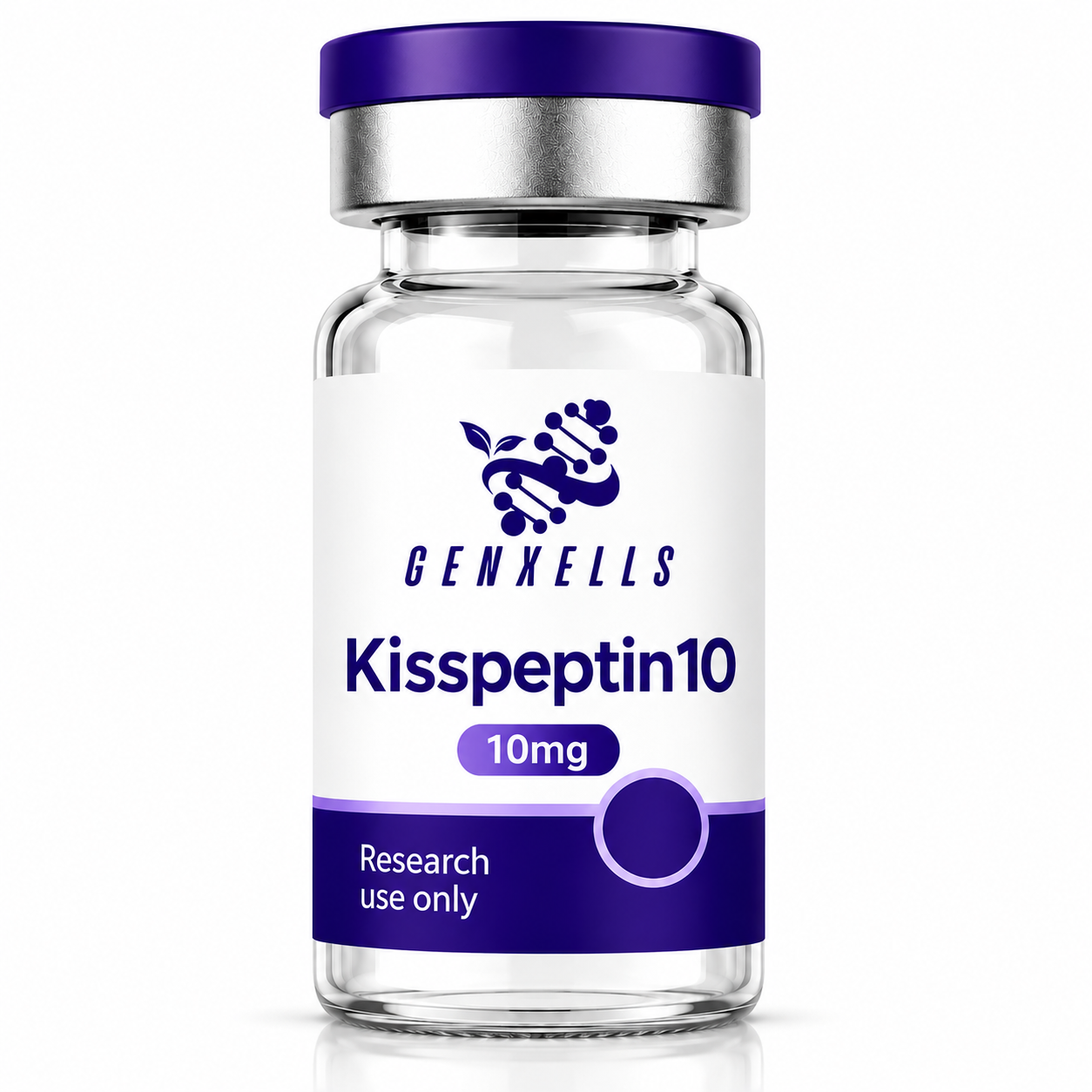
Buy Kisspeptin10 10mg Injection Online
Buy Kisspeptin10 10mg Injection Online is a synthetic peptide fragment derived from the naturally occurring kisspeptin protein, an important regulator of the reproductive endocrine system. Scientists have extensively investigated Kisspeptin-10 because it plays a key role in activating the hypothalamic-pituitary-gonadal (HPG) axis, which controls puberty, fertility, and reproductive hormone production.
Research over the past two decades has shown that kisspeptin signalling is essential for the release of gonadotropin-releasing hormone (GnRH), making it one of the most significant discoveries in reproductive endocrinology. Although laboratory and early clinical studies have demonstrated promising biological activity, Kisspeptin-10 remains an investigational peptide and has not been approved by major regulatory authorities for routine therapeutic use.
For educational information about peptide science and biomedical research:
Website: https://genxells.com/
Email: info@genxells.com
What Is Kisspeptin-10?
Kisspeptin-10 is a 10-amino-acid peptide that represents the biologically active portion of the larger kisspeptin protein encoded by the KISS1 gene.
The peptide binds to the KISS1 receptor (KISS1R), also known as GPR54, located primarily in the hypothalamus. Activation of this receptor stimulates neurons that release gonadotropin-releasing hormone (GnRH).
GnRH subsequently stimulates the pituitary gland to release:
- Luteinizing Hormone (LH)
- Follicle-Stimulating Hormone (FSH)
These hormones regulate:
- Puberty
- Ovulation
- Testosterone production
- Estrogen production
- Sperm production
- Menstrual cycles
- Fertility
Because of this central role, kisspeptin is considered one of the master regulators of human reproduction.
How Does Kisspeptin-10 Work?
Experimental studies indicate that Kisspeptin-10 activates the KISS1 receptor, leading to stimulation of GnRH-producing neurons.
This results in:
- Increased GnRH secretion
- Increased LH release
- Increased FSH release
- Activation of reproductive hormone signalling
- Regulation of ovarian and testicular function
Unlike directly administering reproductive hormones, kisspeptin works by stimulating the body’s natural hormonal control system, making it valuable for scientific studies of endocrine regulation.
Scientific Research
Researchers continue investigating Kisspeptin-10 in numerous areas.
Reproductive Endocrinology
Most research focuses on reproductive hormone regulation.
Scientists study kisspeptin to better understand:
- Delayed puberty
- Hypogonadotropic hypogonadism
- Female reproductive physiology
- Male reproductive physiology
- Hormone regulation
Fertility Research
Early clinical studies have explored kisspeptin for stimulating reproductive hormones during assisted reproduction. These investigations remain under clinical evaluation and are not routine standard therapy.
Neuroendocrine Biology
Kisspeptin is also involved in communication between the brain and reproductive organs.
Researchers investigate:
- Hypothalamic signaling
- Puberty initiation
- Hormonal feedback mechanisms
- Brain-endocrine interactions
Metabolism Research
Emerging evidence suggests kisspeptin signalling may interact with:
- Energy balance
- Nutritional status
- Metabolic regulation
These observations continue to be explored in laboratory and clinical research.
Current Scientific Evidence
Published research includes:
- Laboratory investigations
- Animal studies
- Early-phase human clinical trials
- Reproductive endocrinology research
- Assisted reproduction studies
Although findings have been scientifically important, there is insufficient evidence to support routine therapeutic use outside approved research settings.
Further randomised clinical trials are needed to establish long-term safety and effectiveness.
Regulatory Status
Current regulatory information includes:
- No FDA-approved Kisspeptin-10 medicine exists.
- No EMA-approved therapeutic product is currently available.
- Kisspeptin-10 remains an investigational research peptide.
- Clinical studies continue to evaluate potential future medical applications.
The absence of regulatory approval reflects the need for additional evidence regarding safety, dosing, and clinical benefit.
Safety Considerations
Because Kisspeptin-10 remains investigational, long-term human safety data are limited.
Important considerations include:
- Limited clinical experience
- Unknown long-term safety profile
- No established therapeutic dosing
- Ongoing research regarding effectiveness
- Potential quality concerns with products obtained outside regulated pharmaceutical manufacturing
Healthcare professionals carefully evaluate investigational therapies before recommending them in research settings.
Importance of Professional Medical Care
Individuals experiencing fertility concerns, reproductive hormone disorders, menstrual irregularities, delayed puberty, or endocrine conditions should seek evaluation from qualified healthcare professionals.
Evidence-based care may include:
- Comprehensive medical history
- Hormone testing
- Imaging studies when appropriate
- Approved medications
- Fertility evaluation
- Individualised treatment planning
These approaches remain the standard of care and are supported by substantially stronger clinical evidence than investigational peptides.
Future Research
Scientists continue studying Kisspeptin-10 because it may improve understanding of:
- Fertility
- Puberty
- Reproductive endocrinology
- Neuroendocrine regulation
- Hormonal feedback
- Women’s health
- Men’s reproductive health
Future clinical trials will determine whether kisspeptin-based therapies can safely benefit selected patients.
Frequently Asked Questions
What is Kisspeptin-10?
Kisspeptin-10 is a synthetic peptide fragment that activates the KISS1 receptor and stimulates the release of gonadotropin-releasing hormone (GnRH), helping regulate reproductive hormone function.
Is Kisspeptin-10 FDA-approved?
No. Kisspeptin-10 has not been approved by the U.S. Food and Drug Administration or other major regulatory agencies for routine therapeutic use.
What has Kisspeptin-10 been researched for?
Researchers have investigated reproductive endocrinology, fertility, puberty, hormone regulation, neuroendocrine physiology, and assisted reproduction.
Is more research needed?
Yes. Larger clinical trials are necessary to determine long-term safety, effectiveness, and potential therapeutic applications.
Learn More
For educational information about peptide science, endocrinology, and biomedical research:
Website: https://genxells.com/
Email: info@genxells.com
Final Thoughts
Kisspeptin-10 represents one of the most important advances in reproductive endocrinology research because of its central role in regulating the hypothalamic-pituitary-gonadal axis. Scientific studies have significantly improved understanding of puberty, fertility, reproductive hormone regulation, and neuroendocrine physiology. While early clinical investigations continue to explore potential medical applications, Kisspeptin-10 remains an investigational peptide and is not approve for routine therapeutic use. Individuals seeking treatment for reproductive or endocrine conditions should consult qualified healthcare professionals and rely on therapies supported by established clinical evidence and current medical guidelines. Continued research will help clarify the future role of kisspeptin-based therapies in evidence-based medicine.
Be the first to review “Buy Kisspeptin10 10mg Injection Online”
Related products
Peptide

Peptide
Peptide
Peptide
Peptide
Peptide
Reviews
There are no reviews yet.