
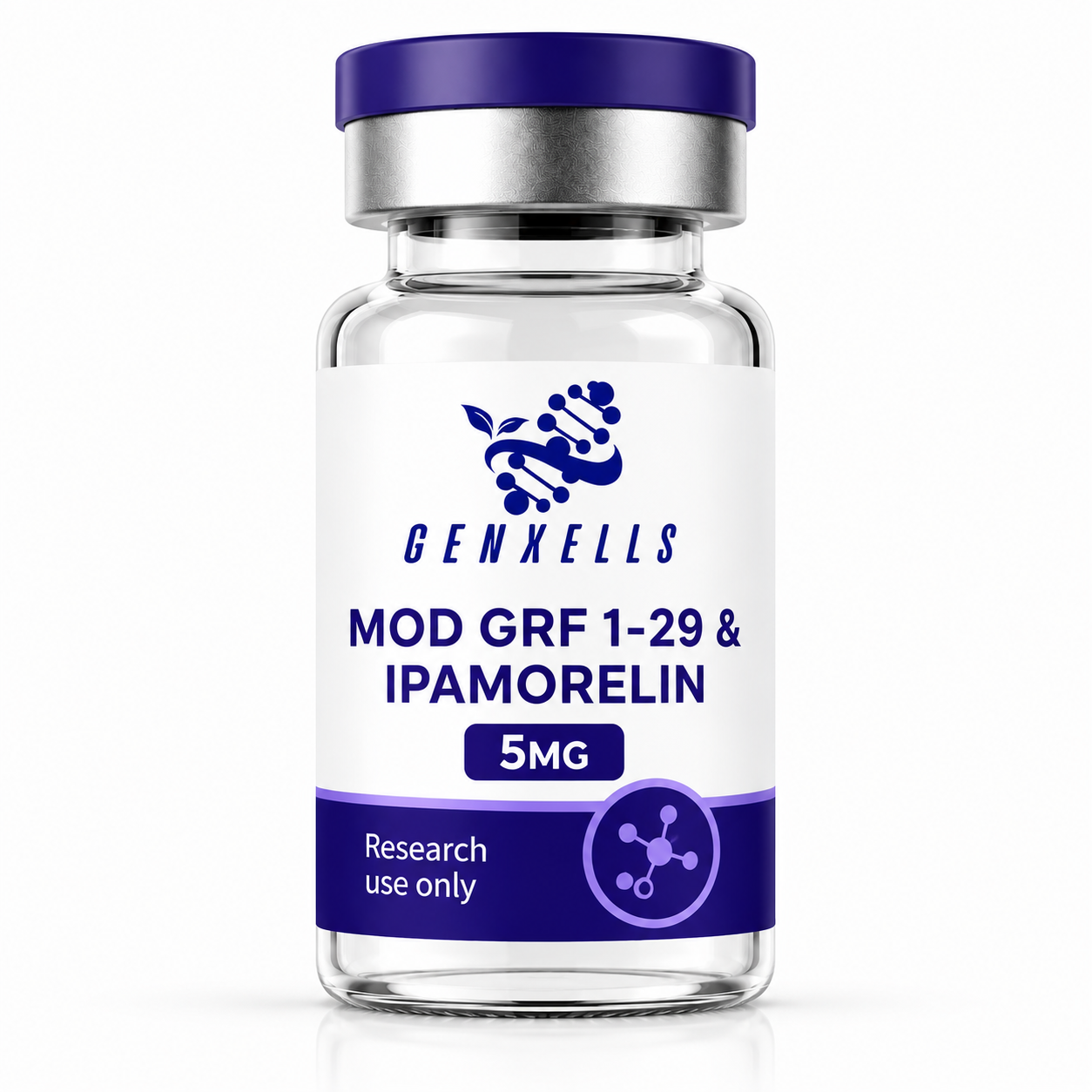
Buy Mod GRF 1-29 & Ipamorelin 5mg Online
Buy Mod GRF 1-29 & Ipamorelin 5mg Online (commonly known as CJC-1295 without DAC) and Ipamorelin are synthetic peptides that researchers study to better understand growth hormone regulation and endocrine physiology. Scientists have investigated these compounds individually and in combination because they stimulate endogenous growth hormone release through different biological pathways.
Current research focuses primarily on laboratory investigations, animal studies, and limited human clinical research. Neither Mod GRF 1-29 nor Ipamorelin has received approval from the U.S. Food and Drug Administration (FDA) for general therapeutic use, and no approved combination product currently exists. Researchers continue to evaluate their biological effects, safety profile, and potential clinical applications.
For educational information about peptide science and biomedical research:
Website: https://genxells.com/
Email: info@genxells.com
What Is Mod GRF 1-29?
Mod GRF 1-29 is a modified analogue of Growth Hormone-Releasing Hormone (GHRH). Researchers designed it to improve stability compared with the naturally occurring hormone while maintaining its interaction with GHRH receptors in the pituitary gland.
Laboratory research suggests that activation of these receptors stimulates the body’s natural release of growth hormone. Scientists use Mod GRF 1-29 as a research tool to study endocrine signalling and hormone regulation.
What Is Ipamorelin?
Ipamorelin is a selective growth hormone secretagogue that binds to the ghrelin (GHS-R1a) receptor. Unlike naturally occurring ghrelin, researchers designed Ipamorelin to investigate selective stimulation of endogenous growth hormone secretion while minimising effects on other pituitary hormones.
Scientists continue to study its pharmacology in experimental settings, but regulatory agencies have not approved it for routine clinical use.
Why Researchers Study Them Together
Researchers investigate Mod GRF 1-29 and Ipamorelin together because they activate different receptors involved in growth hormone regulation.
Current scientific studies explore:
- Growth hormone physiology
- Endocrine signaling
- Pituitary gland function
- IGF-1 regulation
- Hormone feedback mechanisms
- Cellular communication within the endocrine system
These investigations help researchers understand normal human physiology rather than establish approved treatments.
Mechanisms Under Investigation
Laboratory studies suggest that:
Mod GRF 1-29 may:
- Activate GHRH receptors
- Stimulate physiological growth hormone release
- Support research into pituitary signalling
Ipamorelin may:
- Activate ghrelin receptors
- Trigger endogenous growth hormone secretion
- Help researchers study hormone regulation
Scientists continue to evaluate how these pathways interact in controlled research settings.
Current Scientific Evidence
Published research includes:
- Cell culture studies
- Animal investigations
- Early-phase human studies
- Endocrine physiology research
Although these studies have expanded scientific knowledge, current evidence remains insufficient to establish routine therapeutic use of either peptide or its combination. Larger, well-controlled clinical trials are necessary before conclusions about safety or effectiveness can be reached.
Regulatory Status
Current regulatory information includes:
- Mod GRF 1-29 is not FDA-approved for general therapeutic use.
- Ipamorelin is not FDA-approved for therapeutic use.
- No FDA-approved combination product containing both peptides exists.
- Researchers generally classify these compounds as investigational research peptides.
Regulatory requirements vary by country, and anyone involved in biomedical research should consult applicable laws, institutional policies, and ethical guidelines.
Safety Considerations
Researchers continue to evaluate important questions regarding:
- Long-term safety
- Appropriate dosing in research settings
- Pharmacokinetics
- Drug interactions
- Endocrine effects
- Manufacturing quality
Because these compounds remain investigational, published safety information remains limited compared with approved medications.
Importance of Evidence-Based Medical Care
Individuals experiencing endocrine disorders, hormone deficiencies, or metabolic conditions should seek evaluation from qualified healthcare professionals.
Evidence-based medical care may include:
- Comprehensive endocrine evaluation
- Laboratory testing
- Imaging when appropriate
- Lifestyle interventions
- Approved medications
- Long-term clinical monitoring
Healthcare professionals can recommend treatments supported by established scientific evidence and regulatory approval.
Future Research
Scientists continue investigating growth hormone physiology to improve understanding of:
- Endocrine regulation
- Pituitary biology
- Growth hormone signalling
- IGF-1 pathways
- Healthy aging
- Metabolic physiology
Future clinical trials may clarify whether these investigational compounds have any appropriate therapeutic role while meeting accepted standards for safety and effectiveness.
Frequently Asked Questions
Are Mod GRF 1-29 and Ipamorelin FDA-approved?
No. Neither peptide has FDA approval for general therapeutic use, and no approved combination product currently exists.
Why do researchers study these peptides?
Scientists study them to improve understanding of growth hormone regulation, endocrine physiology, and receptor signalling.
Is more research needed?
Yes. Additional high-quality human clinical trials remain necessary before researchers can determine whether these investigational peptides have safe and effective medical applications.
Learn More
For educational information about peptide science and biomedical research:
Website: https://genxells.com/
Email: info@genxells.com
Final Thoughts
Mod GRF 1-29 and Ipamorelin remain important subjects in endocrine and peptide research because they provide valuable insights into growth hormone regulation and receptor biology. Although laboratory and early clinical investigations continue to improve scientific understanding, these compounds remain investigational and lack approval for routine therapeutic use. Continued research and well-designed clinical trials will determine whether future evidence supports any clinical applications while maintaining appropriate standards for patient safety and scientific integrity.
Be the first to review “Buy Mod GRF 1-29 & Ipamorelin 5mg Online”
Related products
Peptide
Peptide
Peptide
Peptide
Peptide
Peptide
Reviews
There are no reviews yet.